
April 8, 2026
The vegetable export sector from India is growing rapidly, as more countries are importing fresh, organic, and processed vegetables. Today, India’s vegetable exporter companies are highly preferred globally because they offer high-quality produce at competitive prices, regardless of the season.
India is the second-largest producer of vegetables, with more than 200 million metric tons produced annually, according to the Food and Agriculture Organization. This strong production capacity makes vegetable exports from India highly reliable and scalable for global buyers.
In terms of international trade, the vegetable exports from India are valued at over $3 billion annually, with major export destinations including the UAE, Bangladesh, Nepal, Saudi Arabia, the UK, and the USA. Additionally, due to rising health awareness in North America and Europe, the demand for organic produce is increasing rapidly. The organic vegetable exports from India segment is growing at a steady rate of 15–20% per year.
Indian exporters strictly follow global certification and phytosanitary standards, allowing the vegetable exports from India to meet the requirements of even the most demanding markets. From staple vegetables like onions, potatoes, and tomatoes to exotic and organic varieties, India continues to strengthen its position in global trade. In fact, India is one of the leading exporters of onions, playing a key role in the international supply chain.
The country’s logistics infrastructure further supports the growth of vegetable exports from India, with advanced ports like Nhava Sheva Port and Mundra Port ensuring efficient and timely shipments worldwide.
With competitive pricing, consistent quality, and expanding export capabilities, vegetable exports from India offer a strong advantage for wholesalers, distributors, and supermarket chains looking to source vegetables at scale.
Why India is a Global Leader in Vegetable Export
India is a major player in the vegetable production market globally. The country’s production is attributable to:
- A range of climates which encourage the production of different crops
- Cheaper land and labor
- Demand for Organic vegetable exports from India
- The development of export markets and the support of government policy
Such attributes favor India as a sourcing country for consistent and large quantities of products.
Types of Vegetable Exports from India
India offers multiple categories of vegetable exports depending on market needs:
Fresh Vegetable Export
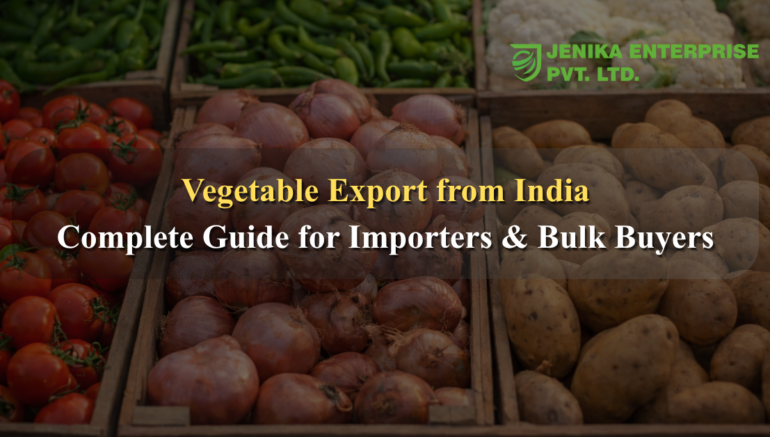
India exports large quantities of fresh vegetables, and these include onions, potatoes, green chilies, lady’s fingers (okra), and brinjals.
Frozen Vegetable Exports from India
There is a growing demand for the export of frozen vegetables from India, as they have a longer shelf life and are less labor-intensive to deal with. The vegetables include frozen peas, sweet corn, and mixed vegetables.
Dehydrated Vegetables Exporters India
India, being one of the foremost exporters of dehydrated vegetables, is a major supplier of products such as flakes, powders, and vegetables, which are widely used in the food processing industry.
Profit Margin in Vegetable Export Business
One of the most attractive aspects of this industry is the profit margin in the vegetable export business.
Typical margins are the following:
- Fresh vegetables: 10% to 25%
- Frozen vegetables: 15% to 30%
- Dehydrated vegetables: 20% to 40%
Profit depends on:
- Product quality
- Export destination
- Logistics and packaging
- Volume of shipment
With the right strategy, exporters can achieve stable and scalable profits.
Country-wise Vegetable Export Opportunities
India exports vegetables to multiple international markets. Here’s a breakdown:
Vegetable Exports from India to UAE
Daily vegetable exports from India to the UAE are in high demand and are very profitable due to proximity. Exports consist of vegetables like onions and tomatoes, plus green vegetables.
Vegetable Exports from India to USA
Vegetable exports from India to the USA consist of organic and niche vegetables. Quality and packaging regulations are strict.
Vegetable Exports from India to Europe
India’s vegetable export to Europe is increasing, particularly for organic and frozen vegetables.
Vegetable Exports from India to UK
India’s vegetable export to the UK mainly serves the Indian and Asian diaspora, with demand for traditional vegetables.
Vegetable Exports from India to Middle East
India’s vegetable export to the Middle East is among the largest due to high consumption and reliance on imports.
Documents Required for Export of Vegetables from India
To start exporting, you must have proper documentation. The documents required for export of vegetables from India include the following:
- Phase one: Obtain an Import-Export Code (IEC).
- Phase two: apply for APEDA (Agricultural and Processed Food Products Export Development Authority) registration.
- Phase three: apply for the FSSAI (Food Safety and Standards Authority of India) license.
- Phase four: procure a phytosanitary certificate.
- Phase five: compile a commercial invoice and packing list.
- Phase six: secure a bill of lading or airway bill.
- Phase seven: Obtain a Certificate of Origin.
The correct paperwork is crucial for a successful customs clearance and ensuring that your company is complying with international requirements.
How to Choose the Right Vegetable Exporter
Selecting the right vegetable exporter is crucial for long-term business success. Here’s what to look for:
- Have experience with international trading.
- Have a certification for quality control.
- Have an established distribution and transport network.
- Offer reasonable rates.
- Communicate with transparency.
Reliable exporters provide a guarantee for on-time delivery and will maintain the quality of their service.
Why Choose Jenika Enterprise
Having established ourselves as an enterprise, Jenika Enterprise has built a reputation for itself. We begin to specialize in the distribution of various vegetables, with particular emphasis on frozen, dehydrated, and fresh vegetables.
Our Key Strengths:
- Strict quality control standards
- Competitive export pricing
- Timely delivery and global logistics support
- Customized packaging solutions
- Delivery to and from the Middle East, as well as Europe and other regions of the world
Our commitment lies in establishing enduring partnerships with importers and bulk buyers globally.
Conclusion: Start Your Vegetable Import Business Today
The vegetable export sector from India offers immense opportunities for global buyers. With a wide variety of products, competitive pricing, and reliable exporters like Jenika Enterprise, importing vegetables from India can significantly boost your business.
If you are looking for a trusted vegetable exporter, contact Jenika Enterprise today and explore profitable import opportunities.
Frequently Asked Questions
- What is the profit margin in the vegetable export business?
Depending on the export market and product, profit margins in the vegetable export business can range from 10% to 40%. - Which vegetables are exported from India?
Onions, potatoes, tomatoes, okra, and green chilies are some of the vegetables exported from India, along with some processed vegetables and frozen and dehydrated products. - How to start vegetable exports from India?
To export vegetables from India, one must obtain IEC registration, build a network of suppliers, establish a packaging unit, and acquire international clients. - What documents are required for vegetable export?
To export vegetables from India, one needs an IEC and APEDA registration, an invoice, a packing list, and a phytosanitary certificate.